Royal Ontario Museum
Mobile Ticketing Experience
I led the design of a mobile-first, bilingual (English & Chinese) ticketing system for the Royal Ontario Museum. The experience supports WeChat Pay and Alipay, making ticket purchases accessible for international visitors.
Client
Royal Ontario Museum
Tools
Figma
Lovable
Adobe Creative Suite
Role
Journey owner
UI designer
Illustrator
Deliverables
Illustration & animation
Campaign journey
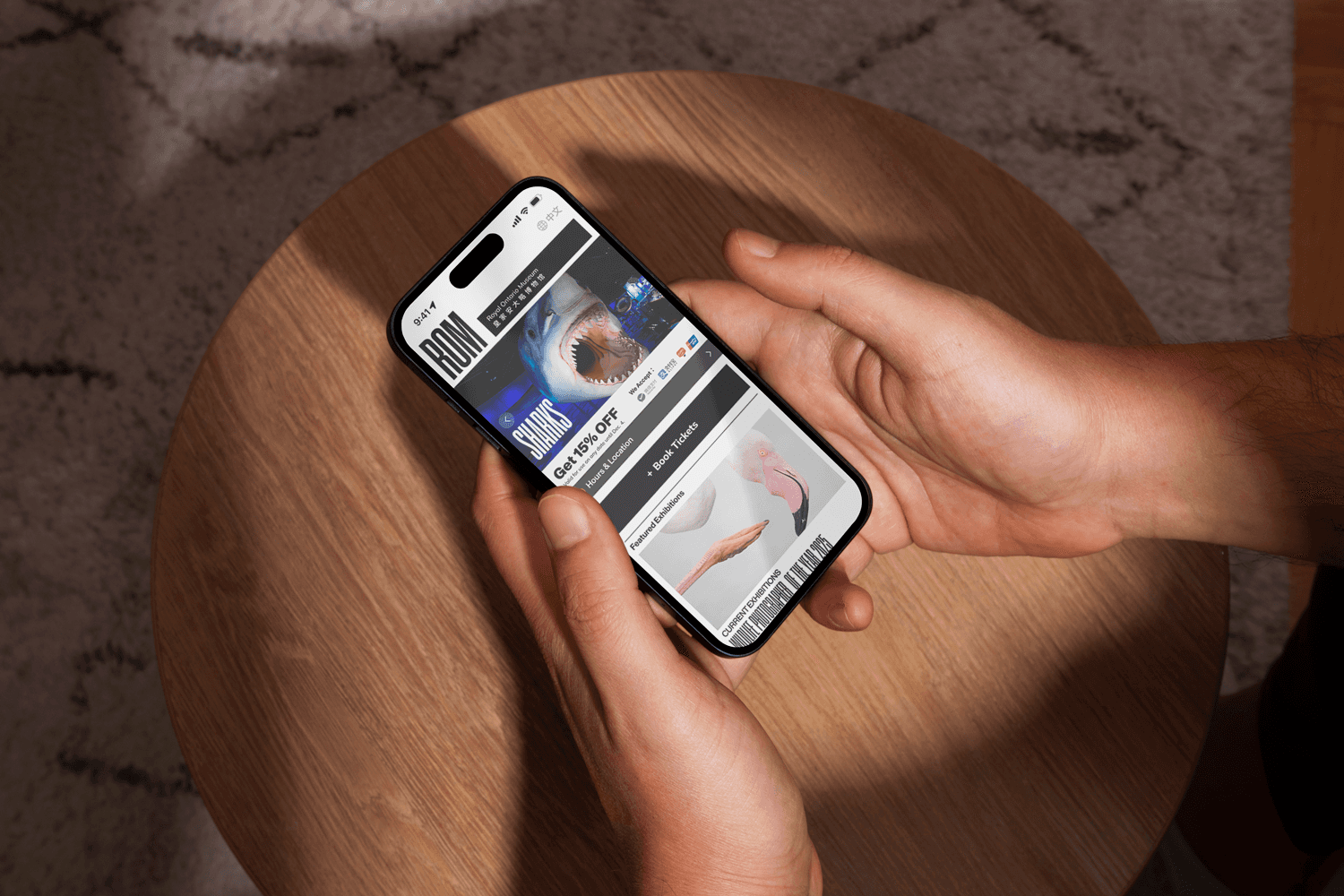
Project Background
The Royal Ontario Museum’s official website supports only major North American payment methods in order to remain neutral and inclusive within Canada’s multicultural context.
At the same time, with the growing Chinese Canadian population and increasing tourism from China, the museum is looking to attract more Chinese visitors and reduce payment friction by supporting familiar Chinese payment methods through a dedicated H5 ticketing experience.
DEFINE
Tailoring the experience for target customers
The primary target audience includes Chinese international students living in Toronto and Chinese tourists visiting the city. Both groups are highly familiar with mobile payment platforms such as Alipay and WeChat Pay and prefer mobile-first experiences.
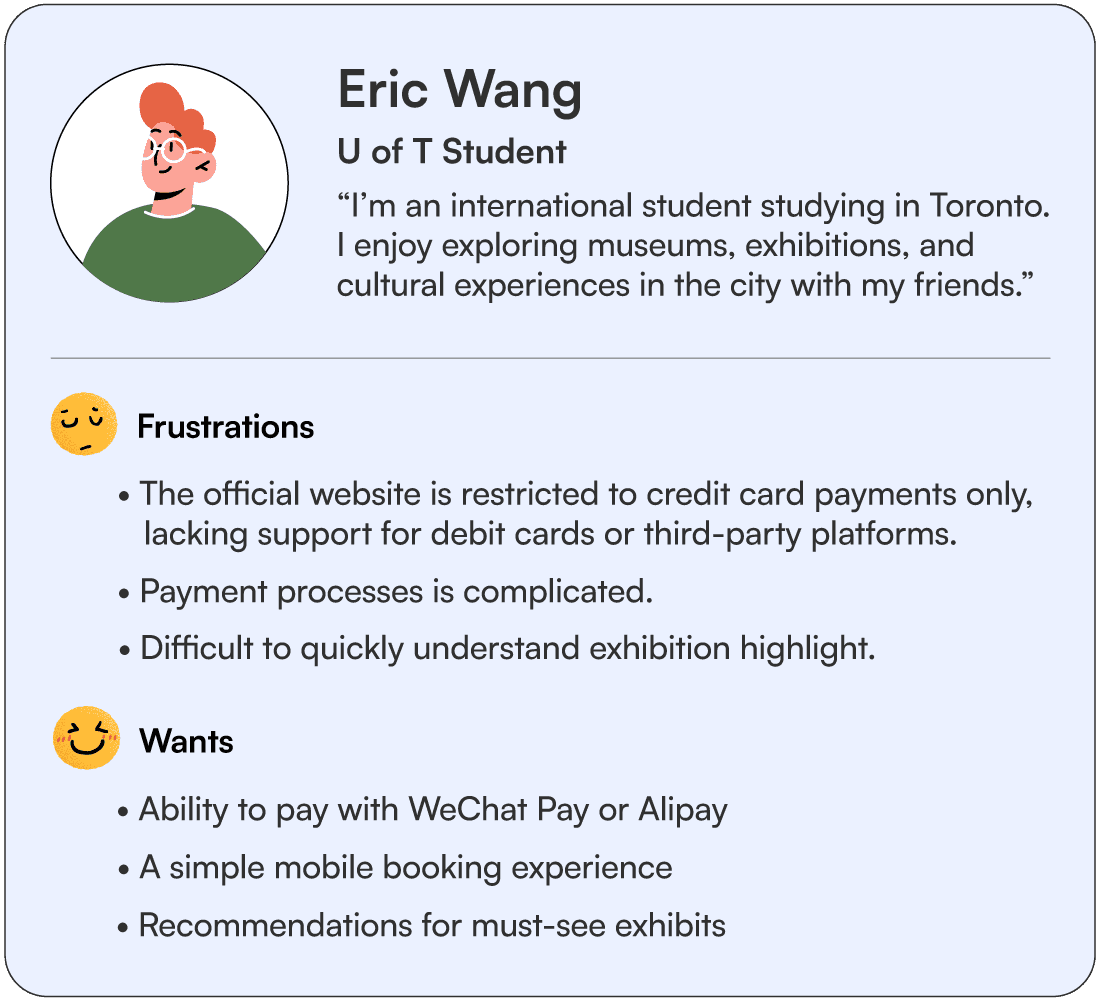
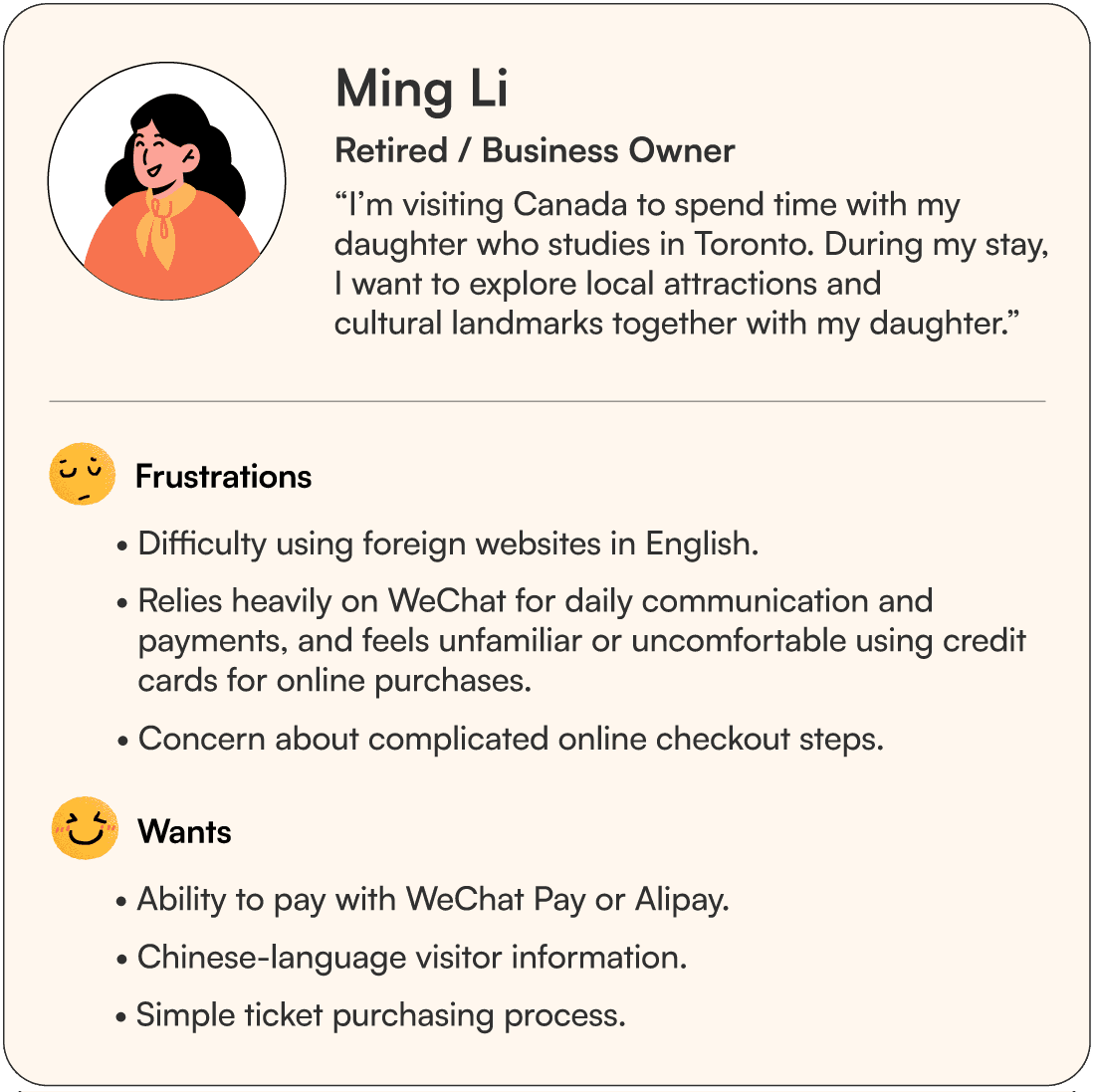
We identified three key opportunities to drastically improve the ticket purchasing experience for target customers.



IDEATION
Human Require + AI Draft + Human Refine
The primary target audience includes Chinese international students living in Toronto and Chinese tourists visiting the city. Both groups are highly familiar with mobile payment platforms such as Alipay and WeChat Pay and prefer mobile-first experiences.
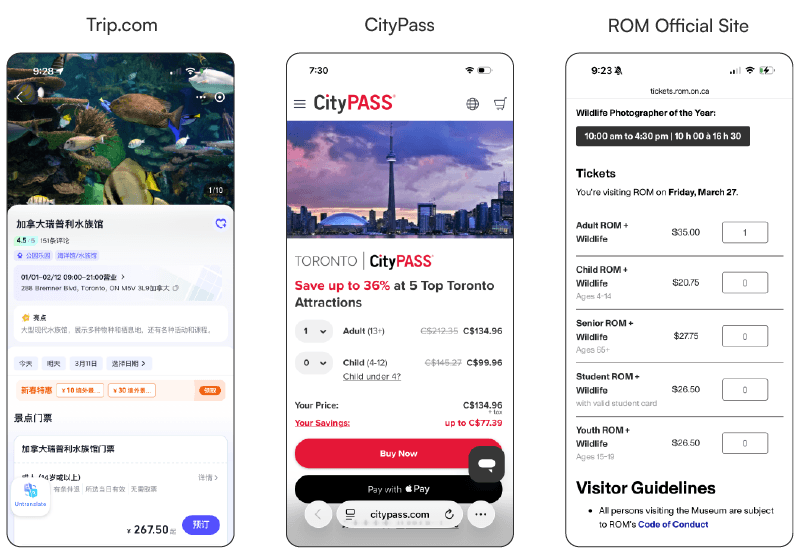
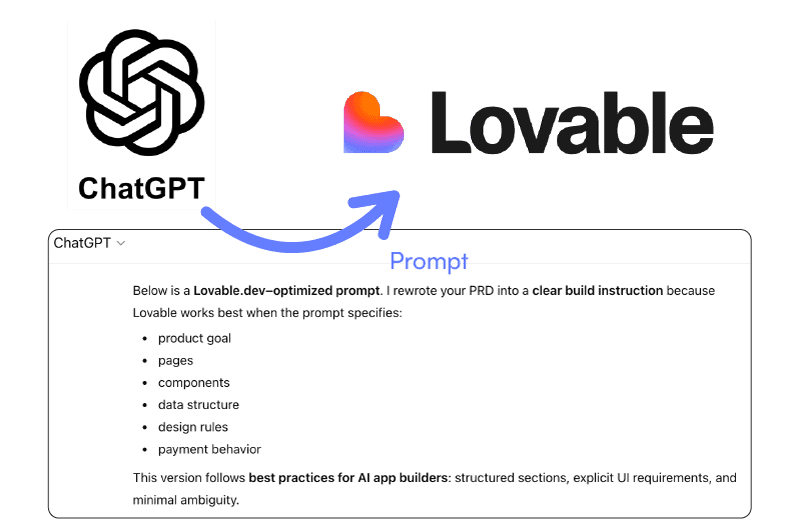
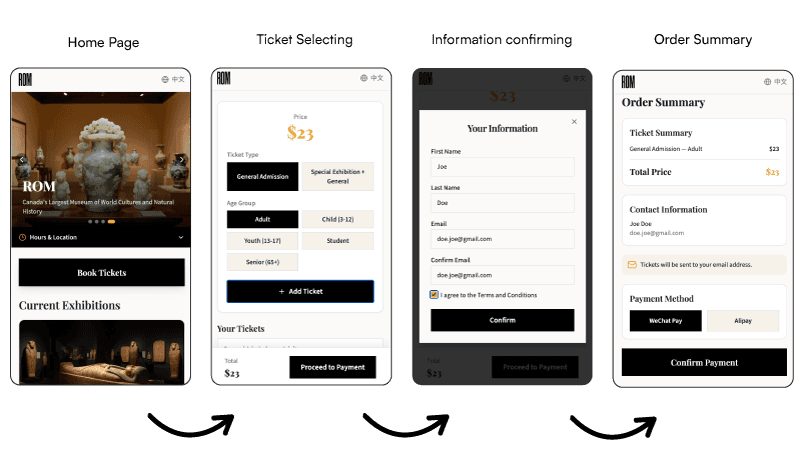
Rather than starting with low-fidelity wireframes, I used ChatGPT to generate prompts optimized for Lovable.dev based on the PRD. These prompts were then used in Lovable to generate several prototype concepts. We reviewed these prototypes with engineers to quickly align on a technically feasible solution.

IDEATION / TESTING
What my intuition and AI tool didn't know…
We conducted a usability test with five real target users. Each participant was given specific museum ticket purchasing tasks to complete using the prototype generated on Lovable.dev. During the session, we observed their behaviors and interactions with the interface. After the tasks were completed, we conducted short interviews to gather feedback about their overall user experience.
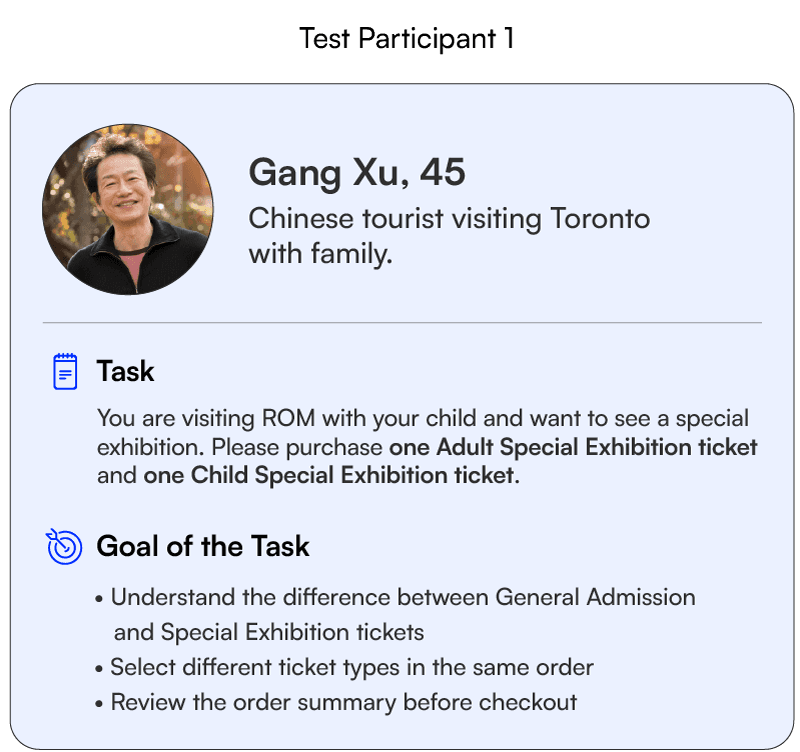
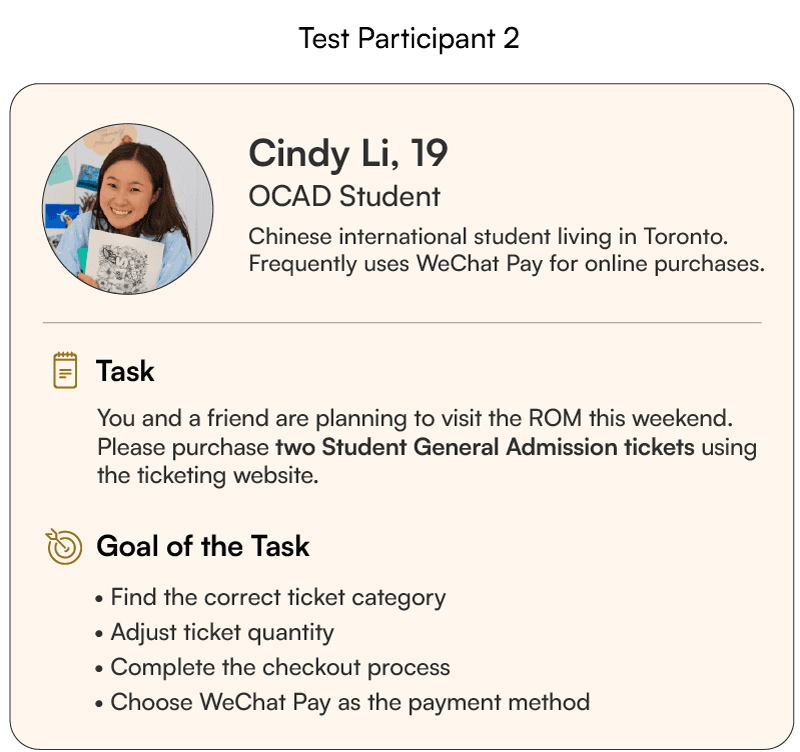
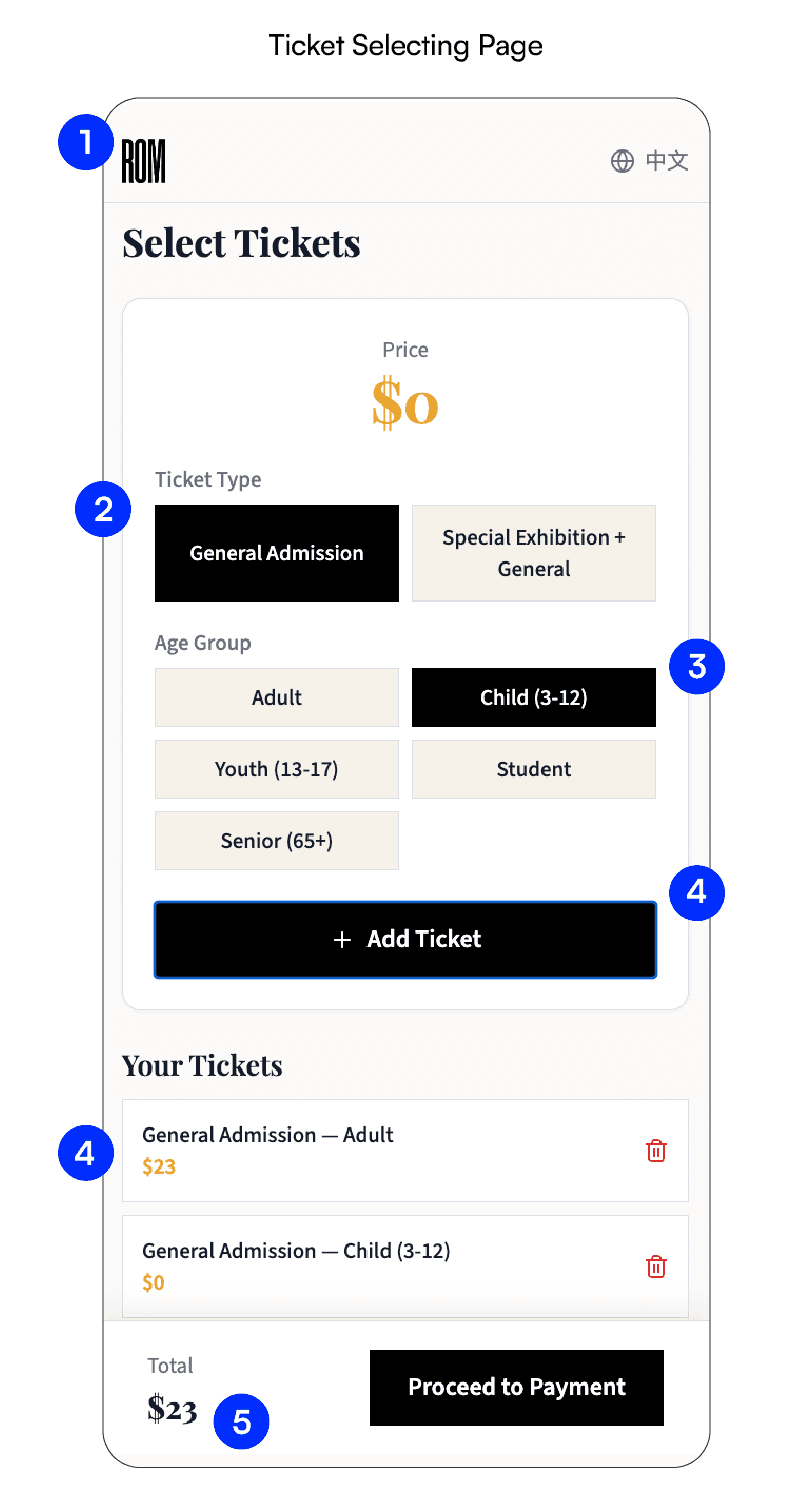
After completing the usability test tasks, participants were interviewed and asked several questions about their experience on each screen. For example, on the ticket selection page we asked:
Can you understand the ticket types?
Can you distinguish between general admission and special exhibition tickets?
Can you easily adjust ticket quantities?
Do you understand the ticket pricing?
Do you know how to go back to the last step?
Based on these insights and the participants’ feedback, we collaborated with the team to refine and improve the interface design.